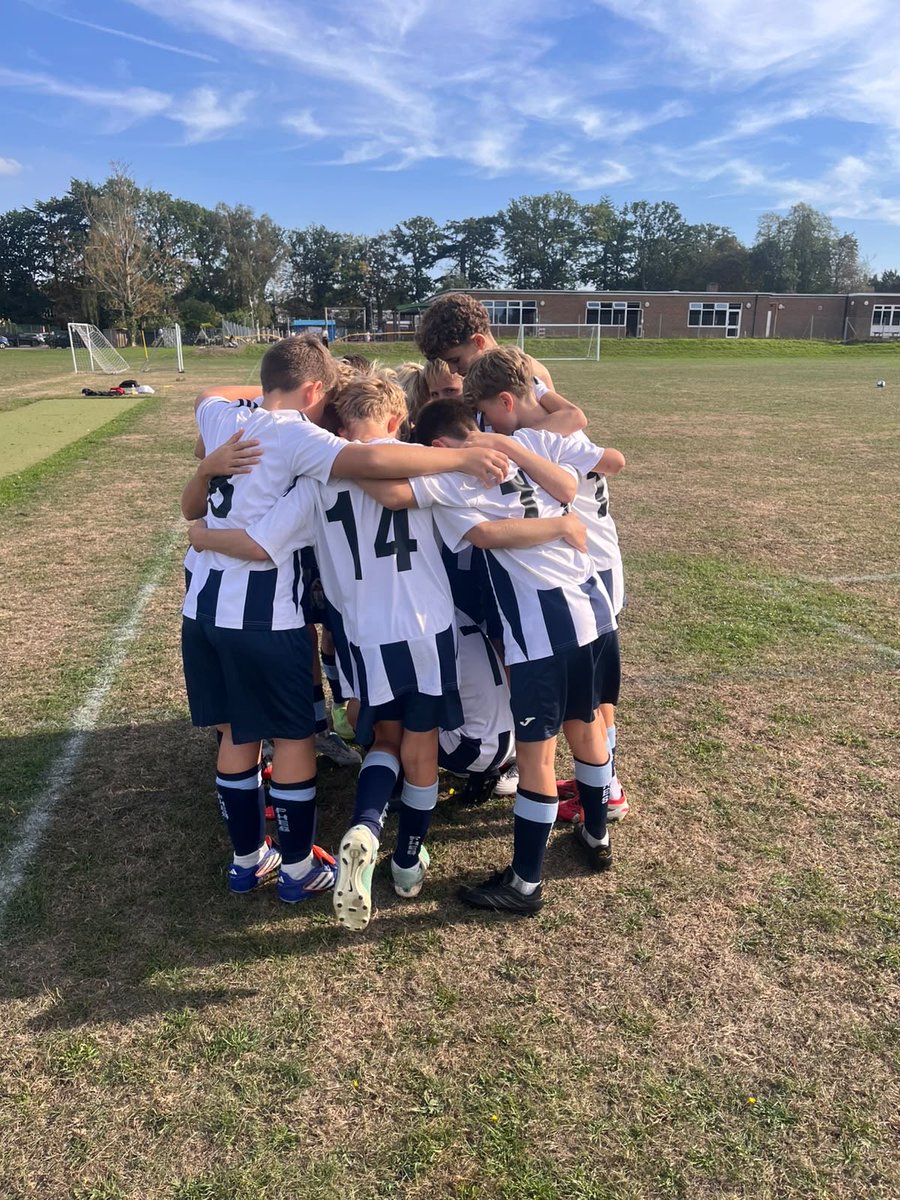
 @TeamFHES - 25/09/2026Congratulations to our Year 7 footballers who won 3-1 in the County Cup #TeamFHES
Subject Information - GCSE Film Studies
VISION / AIM
The medium of film will enable our students to view the worlds of others through windows and explore their own identity through film texts which mirror their own experiences. In a world dominated by the moving image, Film Studies will curate an engagement with films of the highest quality, as well as diversity.
We have identified GCSE Film Studies as a perfect complement to studying English Language and English Literature at the highest level possible for GCSE, since students will study a range of texts from around the world and develop both their analytical and creative skills.
Additionally, we are planning to join the team at the British Film Institute for their revision study day for KS4 Film Studies, as well as to look at opportunities to watch content on the big screen. There are also plans to screen student films at FHES.
Resources and support materials can be found on Google Classroom.
Further information can be requested from Mrs O Awojobi, Lead Teacher, oawojobi@fhes.org.uk
CURRICULUM OVERVIEW
|
|
Autumn Term |
Spring Term |
Summer Term |
|
|
Year 10 |
Contemporary UK Film (Component 2, Section C) Key developments in film and film technology (Component 1, Section B) Students will be exploring film language at a micro and macro level. Lessons will develop the acquisition of subject-specific terminology for GCSE Film Studies.
|
US Independent Film (Component 1, Section C) Global English Language Film (Component 2, Section A) Key developments in film and film technology (Component 1, Section B)
|
I
Global English Language Film (Component 2, Section A) NEA Film Screenplay NEA Film Sequence and Evaluation Phase (Component 3 Key developments in film and film technology (Component 1, Section B) |
|
|
Year 11 |
Global Film Non-English Language (Component 2, Section B) Revision / Exam Technique / Mocks 1 Post mocks - US Film 1 (Component 1, Section A) Key developments in film and film technology (Component 1, Section B |
US Film 2 (Component 1, Section A) US Independent Film - revision (Component 1, Section C) Key developments in film and film technology (Component 1, Section B) |
Global Film - revision Final Exams Revision / Exam Technique |
KEY SKILLS
|
|
Year 10 |
Year 11 |
|
Analysis |
Using subject specific terminology; writing about how film creates meaning and generates responses; analysis of representations; analysis of aesthetics; informing analysis with an understanding of contexts (social, cultural, political, historical, production). |
In addition to the skills in year 10, students will also write an evaluative analysis of 750-850 words. They will learn how to evaluate their own production against professionally produced work and give a well-focused account of their creative aims and intentions. They will also be expected to apply their knowledge and understanding of film elements in order to analyse and evaluate their own work. |
|
Application of Critical Approaches |
The application of the key elements of film form (cinematography, mise-en-scene, editing and sound) and the context of film. The understanding and application of key study areas: Aesthetics and Film Style; Representation and Specialist Writing. |
The application of narrative theories: writing about narrative construction and exploring how elements of film language can have a narrative function. The application of an understanding of genre as a principal structuring element of narrative. |
|
Essay Writing |
Writing confident thesis statements; how to reference a film; developing a discursive approach; making comparisons. |
Writing sophisticated and conceptual thesis statements; writing a cohesive exploration of the question and thesis statement; making detailed and sophisticated comparisons; referencing critical theories. |
|
Practical Skills:
|
Students will learn how professional film-makers achieve visual and audio outcomes in order to inform their own work. There will be opportunities for students to experiment with film-making at home. Students will be guided through the conventions of a screenplay and storyboards as well as software / web programmes to help format their work. Visualisation skills. |
Students will need to meet a deadline for their film extract (2 minutes to 2.5 minutes) or screen play (800 to 1000 words). |
AS LEVEL FILM STUDIES EXAM BOARD
|
Exam Board |
Eduqas |
|
|
NEA |
From a selection of briefs. Worth 30% (60 marks) |
|
|
Paper 1 |
Key Developments in US Film (35%) Written examination: 1 hour 30 minutes (70 marks) |
Section A: US Film Comparative Study (2 films). Section B: Key Developments in film and film technology. Section C: US independent film. |
|
Paper 2 |
Global Film: Narrative, Representation and Film Style (35%) Written examination: 1 hour 30 minutes (70 marks) |
Section A: Global English Language film. Section B: Global Non-English Language film. Section C: Contemporary UK film. |
|
Link to the Specification |
https://www.eduqas.co.uk/media/oblk51zi/eduqas-gcse-film-studies-spec-from-2017-e-101126.pdf |
|